
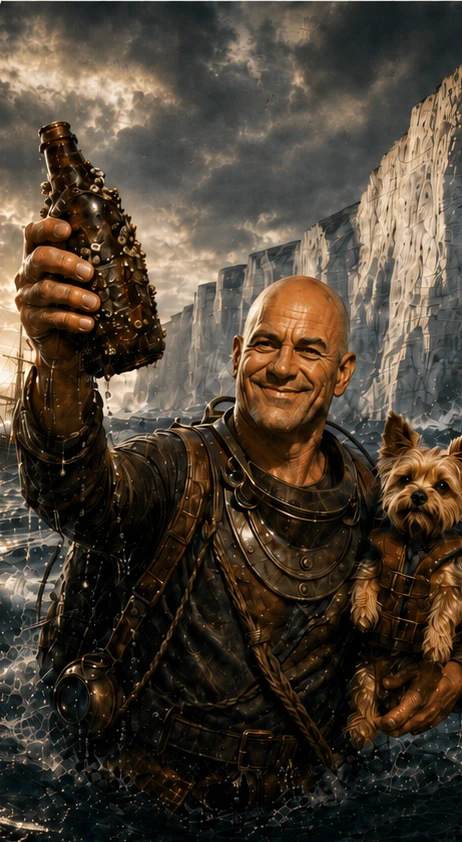
Some beer stories begin in a brewery. This one begins on the bottom of the English Channel.
About five kilometres off the coast of Dover lies the wreck of the Mindoro, which went down in dense fog on 27 November 1864. Among her cargo were roughly two dozen bottles of Guinness.
In the summer of 2025, Belgian underwater photographer Stefan Panis and Dover diver Eddie Huzzie were working the wreck when they came across one of them, still resting where the ship had left it. Back on the boat, a rinse was enough to bring the markings up: Guinness Extra Stout, London.
Think about what that bottle was filled into.
Victoria was on the throne. There were no automobiles, no radio, no commercial aviation, and neither World War had been imagined. Through shipwreck, salt water, currents and a hundred and sixty years of traffic passing overhead, one small piece of brewing history stayed put.
What happened next is the part the headlines tend to miss. Panis and Huzzie took the bottle to microbiologists at KU Leuven, who are attempting to recover viable yeast DNA from inside it — with the aim of rebrewing an 1860s Guinness from its own organisms. The divers have named the effort Project Jurassic Beer.
That is what makes a discovery like this matter. It is not simply an old bottle of stout. It is evidence of how far beer travelled, how much brewing depended on maritime trade, and how an everyday product can turn into an archaeological artefact given enough time and salt water.
A bottle brewed to be opened and enjoyed became a time capsule instead. It may yet get opened after all.